

Joint Statement to Preserve Temporary Protected Status for Haiti
Maryknoll Office for Global Concerns joins with over 300 other organizations to call for an extension of TPS for Haiti.
Download the statement as a PDF
January 30, 2026
Mr. Donald J. Trump
President of the United States
The White House
1600 Pennsylvania Ave.
Washington DC
RE: Why Extending and Redesignating TPS for Haitian Nationals Is In the U.S. National Security and Economic Interests
Dear President Trump:
The Haitian Bridge Alliance, the AFL-CIO, allied civil rights, faith-based, business, and community organizations across the United States are deeply concerned about the administration’s decision to terminate Temporary Protected Status (TPS) for the Republic of Haiti, which will take effect on February 3, 2026, despite significant gang violence, a humanitarian crisis, and instability on the island. We urge you to reconsider.
We believe extending and redesignating TPS for Haitians is in the clear national interest of the United States, from a labor, business, and taxpayer perspective. This is not an appeal to charity; it is an appeal to pragmatic self-interest, grounded in facts.
1. HAITIAN TPS HOLDERS STRENGTHEN THE U.S. WORKFORCE AND GDP
As of March 31, 2025, approximately 1.3 million people had TPS in the United States. Recent analyses estimate that about 570,000 TPS holders are active in the U.S. labor force, including roughly 95,000 in leisure and hospitality, 90,000 in construction, 85,000 in business services, 80,000 in wholesale/retail, and 70,000 in manufacturing. Moreover, hospitals have ranked in the top five employment industries for Haitian TPS holders in particular.
These workers are overwhelmingly employed—one study found 94.6% of TPS holders were working in 2021, contributing billions in federal, state, and local taxes and roughly $8 billion in spending power in that year alone.
According to official records, roughly 330,000–353,000 Haitians currently benefit from TPS. Removing their work authorization will not magically create other workers to replace them—instead, it will:
- Disrupt U.S. employers who rely on this legal, vetted workforce
- Worsen labor shortages in construction, service, and care industries in key states
- Harm co-workers of former TPS holders, including U.S.-born co-workers, who will variously face job loss, forced overtime, and other negative impacts due to supply chain disruptions
- Reduce tax revenue and consumer demand in local economies
- Force workers into the shadow economy where they will be at risk of exploitation
An analysis from the Penn Wharton Budget Model estimates that over 700,000 TPS recipients losing status—including about 550,000 legally working—would remove more than $36 billion in annual GDP, with significant negative impacts on sectors already facing shortages.
From an economic perspective, it is counter-productive to deliberately shrink a legal, tax-paying workforce that is already filling critical gaps in the U.S. labor market.
2. TPS IS MORE COST EFFECTIVE THAN MASS DEPORTATION
Large-scale interior deportations and maritime interdiction operations are expensive. They require:
- Intensive use of ICE and DHS enforcement resources
- Detention capacity and contracted bed space
- Charter flights to a country where commercial air service is limited and often disrupted by violence
- Ongoing Coast Guard and Navy deployments if maritime migration surges
By contrast, TPS holders are already registered with DHS, vetted, and self-supporting through their own labor. Maintaining TPS:
- Keeps enforcement resources focused on actual public-safety threats, not law-abiding workers
- Reduces detention and transportation costs
- Avoids a new, costly enforcement crisis in the Caribbean and at the southern border
The option that delivers stability and protection at a fraction of the cost of mass removals is best for the federal budget.
3. ENDING TPS NOW RISKS TRIGGERING A REGIONAL SECURITY AND MIGRATION CRISIS
The humanitarian and security situation in Haiti is not merely unstable—it has been historically declining. United Nations and humanitarian reporting indicate that over 1.4 million people have been displaced by gang violence, the highest number ever recorded in the country.
Armed groups or gangs control roughly 90 percent of the country’s capital and are expanding into other regions. A recent large-scale attack in Haiti’s Artibonite department saw homes burned, civilians killed, and hundreds forced to flee; local officials estimate that around half of that region is now under gang influence. In 2024 alone, over 5,600 were killed in gang violence and more than 1,400 kidnapped.
To tackle the severe safety and insecurity crisis in Haiti, the United States, through the United Nations, has funded that Multinational Security Support (MSS), led by the Republic of Kenya, and most recently transformed it into the Gang Suppression Force (GSF). In fact, the United States considers Haiti so dangerous that the Department of State has designated Haiti as a Level 4 – Do Not Travel Country due to persistent violence and kidnapping.
Returning hundreds of thousands of people into this environment in a compressed timeframe would:
- Overwhelm Haiti’s already-fragile state institutions
- Hand more leverage to armed groups that prey on returnees and place them at grave risk, which would be life threatening.
- Increase pressure for irregular migration by sea and land toward the United States and its neighbors
- Force the U.S. to spend far more on maritime, border, and regional security operations
From a security standpoint, it is safer and cheaper to allow Haitian TPS holders working legally inside the United States than to fuel a new wave of instability and irregular migration in the Caribbean basin.
4.TPS SUPPORTS KEY U.S. STATES AND INDUSTRIES
TPS beneficiaries are heavily concentrated in states with significant economic and political weight—such as Florida, New York, Massachusetts, Texas, and others—where they contribute to:
- Construction and rebuilding
- Hospitality and tourism
- Healthcare and elder care
- Retail and logistics
- Agriculture including farming and meat packing industries
- Transportation
In a letter led by Senator Warren and signed by more than 60 members of Congress dated September 2025, urging your administration to not terminate TPS. It was also noted that more than 570,000 TPS holders contribute about $21 billion annually to the U.S. economy and pay an estimated $5.2 billion in taxes, while helping stabilize critical sectors like health care.
Ending TPS for Haitians will directly reduce the labor supply in these sectors in states that rely on them, making it harder to grow the local economy, staff facilities, and produce needed levels of goods and services, potentially driving up costs still further for American consumers and patients. In cities like Springfield, Ohio, Haitian immigrants have helped reverse population decline, leading to higher wage growth compared to the rest of the state and country.
From a jobs and competitiveness perspective, retaining experienced, vetted workers in these sectors serves American workers, American aging population and seniors, and American businesses.
5. TPS HELPS STABILIZE HAITI THROUGH REMITTANCES—WITHOUT FOREIGN AID OR TROOPS
In addition to providing these substantial tax and spending revenues that spur the U.S. economy, TPS holders in the United States are one of the most important informal stabilizers of the fragile economy in Haiti. According to recent economic data, remittances to Haiti reached about $4.1 billion in 2024, up from roughly $3.75 billion in 2023, and have averaged more than $2.1 billion annually since the early 2000s.
Those dollars:
- Help Haitian families buy food in a context where more than half the population faces severe hunger
- Pay for schooling, basic health care, and shelter
- Reduce the economic desperation that drives irregular migration and recruitment by gangs
If TPS is ended and lawful work authorization disappears, remittance flows will decline sharply, accelerating state failure and driving more people to flee. Maintaining TPS is therefore one of the most cost-effective stability tools available to the United States—requiring no foreign-aid appropriation, no troop deployments, and no new nation-building commitments.
That is effective foreign policy in practice: using low-cost, domestic tools to reduce the chance that the U.S. will face a larger, more expensive crisis later.
6. TPS ALLOWS THE U.S. TO FOCUS ENFORCEMENT ON REAL THREATS
TPS holders have undergone background checks and regular vetting as a condition of their status. They are known to DHS and are among the most documented and trackable populations in the country.
Ending TPS would:
- Push a large, low-risk population into undocumented status and the underground economy
- Make them harder—not easier—to monitor
- Divert enforcement resources away from criminals, smugglers, and traffickers
Maintaining TPS, by contrast, keeps a clear distinction between law-abiding, employment-authorized residents and those who represent genuine security concerns.
7. TPS FOR HAITIAN NATIONALS IS CONSISTENT WITH THE STATUTE AND U.S. CREDIBILITY
Congress created TPS to address precisely the kind of situation Haiti faces today—“extraordinary and temporary conditions” that make safe return impossible. Your government has acknowledged Haiti’s extreme violence and humanitarian crisis but concludes that continuing TPS is not in the U.S. national interest.
We respectfully submit that, in light of the enormous economic contribution TPS holders make to the U.S, the record-high displacement and gang control in Haiti, the stabilizing impact TPS holders have in Haiti, The enforcement and security costs of mass return
Extending TPS for Haitians is fully consistent with the TPS statute and more supportive of U.S. interests than triggering a new wave of instability and potential irregular migration in the region would have on the United States.
8. OUR REQUEST
For these reasons, we respectfully urge your Administration to:
- Rescind the termination and redesignate Haiti for TPS, or at minimum
- Extend Haiti’s TPS designation beyond February 3, 2026, and
- Instruct DHS to review the economic, security, and regional-stability impacts of Haitian TPS including impacts on U.S. workers and labor markets, enforcement costs, and Caribbean security.
By extending TPS for Haiti, the United States protects its own economy, security, and regional interests while maintaining stability in our own neighborhood.
Respectfully,
Haitian Bridge Alliance
AFL-CIO
National Organizations
African Bureau for Immigrants and Social Affairs (ABISA)
Adhikaar for Human Rights and Social Justice
Advocates for Basic Legal Equality, Inc.
American Federation of Labor and Congress of Industrial Organizations (AFL-CIO)
African Communities Together
African Immigrant Collective Inc
American Federation of Teachers (AFT)
AFT Massachusetts
Al Otro Lado
Alianza Americas
Allegiance Christian Church
Amazing Grace Ministries of PBC, Inc
America’s Voice
American Friends Service Committee (AFSC)
American Jewish World Service
American Pride Rises
AMURT-Haiti
Angry Tias and Abuelas
APALA Orange County
Arab American Heritage Council
Arriba Las Vegas Worker Center
Asian Pacific American Labor Alliance-AFL-CIO (APALA)
Association of Exchange and Development of Activities and Partnership, AEDAP
Association of Haitian Educators of Dade (AHED)
Association of Haitian Women (AFAB)
AVAN Immigrant Services
Avanse Ansanm
Avodah
Being Peace Sangha
Bethel Computers For Education
Beyond Borders
BLM Boise
Blue Couch Chat
BMBCC, INC- Boston Missionary Baptist Community Center, INC
Border Kindness
Borderlands Resource Initiative
Boston Haitian Resource Hub
Boston Immigration Justice Accompaniment Network (BIJAN)
Boston Workers Circle
Bridges of Idaho
California Immigrant Policy Center
Cape Cod Women for Change -Mid-Cape Indivisible
Central American Resource Center (CARECEN) DC
CASA
CATA – The Farmworker Support Committee
Catholic Charities Maine, Refugee and Immigration Services
Catholic Legal Immigration Network
Catholic Legal Services
Center for Gender & Refugee Studies
Center for Human Rights and Constitutional Law
Center for New Americans
Central Christian Church
Champion City Church
Charnette Frederic Civic Association
Chicago Federation of Labor
Christ Like Collection
Church Pentecostal crusade of fishers of men
Church World Service
Cinderella Pictures
Committee of Interns and Residents/Service Employees International Union (CIR/SEIU)
City Heights community organization
Coalición de Derechos Humanos
COCO Consulting
Color Of Change
Colorado Immigrant Rights Coalition
Communications Workers of America (CWA)
Communities United for Status & Protection (CUSP)
Community Coalition for Haiti
COMMUNITY IMPACT FOR CHANGE INC
Community Sponsorship Hub
Congregation of Our Lady of Charity of the Good Shepherd, U.S. Provinces
Coral Springs
Dayton Anti-racist Network
Del Camino Jesuit Border Ministries
Delmar Church of Nazarene, DE
Delmarva muslim Community
District Leader Anthony Beckford
Diversity in Health Training Institute
Dominican Sisters of Mission San Jose
DRUM – Desis Rising Up & Moving
Duss Productions
East Bay Sanctuary Covenant
Eglise de Dieu Apostolique Inc
Elmont Cultural Center
Endeavor Financial Services LLC
Equal Ground Education Fund
EqualHealth’s Global Campaign Against Racism
Equality for Flatbush
Espacio Migrante
Fair Fight Action
Fair Immigration Reform Movement (FIRM)
Faith Choice Ohio
Faith in Action International
Familias Unidas en Acción
Family Action Network Movement
Farmworker Association of Florida
FEA Foundation Ministries
First Baptist Church in Beverly
First Churches of Northampton
Florida Committee On Haitian Ministry
Florida Conference of the United Methodist Church
Florida Immigrant Coalition
Florida Interfaith Coalition
Florida Rising
Force Multiplier
For the Village Inc.
Foundation for the Emancipation of Women and Girls
Freedom for Immigrants
Friends of Matènwa
Friends of Swazi Freedom
FWD.us
Gem City Action
Gospel Assembly-Queens
Grannies Respond
Grantmakers Concerned with Immigrants and Refugees
HADUNAT News
Golf Federation of Haiti
Haiti H2O: Hope to Opportunity
Haiti Partners
Haiti Policy House
Haiti Solidarity Network of the Northeast
HAITIAN AMERICAN BAPTIST MINISTER ALLIANCE
Haitian American Collaborative, Inc.
Haitian American Lawyers Association of Georgia
HAITIAN AMERICAN LEADERSHIP INITIATIVE
Haitian American Nurses Association Inc. Greater NY
Haitian American United for Progress
Haitian Association of Indiana
Haitian Bible Baptist church Inc
Haitian Bridge Alliance
Haitian Church of Nazarene
Haitian Church of God of Unity Everett MA
Haitian Evangelical Clergy Association
Haitian Interpreter Services
Haitian Ladies Network
Haitian love inc
Haitian Mental Health Network
Haitian Support Center
Haitian Women for Haitian Refugees
Haitian Women’s Collective
Haitian-American Foundation for Democracy
Hand in Hand International Adoptions
Health Equity Research Solutions, LLC
Health Law Advocates
Hemispheric Network for Haitian Migrants’ Rights
Hispanic Federation
Ho’opae Pono Peace Project
Homestead Haitian Pastors Association Inc
Hope and Change for Haiti
Hope Huddle
Houston Immigration Legal Services Collaborative
Human Rights First
HumansFirst.world
Ideatek Design
Illinois Coalition for Immigrant and Refugee Rights
Immigrant Defenders Law Center (ImmDef)
Immigrant Legal Advocacy Project
Immigrant Welcome and Resource Center
In Cultured Company
Indivisible Fireside Chat
Indivisible Mansfield and Beyond
Indivisible Projects
Indivisible Springfield
Indivisible Upper Cape
Indivisible Upstate SC
Institute for Justice and Democracy in Haiti
IUE-CWA
International Union of Painters and Allied Trades (IUPAT)
Jerise Lettering & Artwork
Jewish Activists for Immigration Justice (JAIJ)
Jewish Community Relations Council of Greater Boston
Jules Legacy Enterprise
Juliette Bethea
Just Neighbors
JVS Boston
Karen Organization of San Diego
Kids in Need of Defense
Kirva
L’union Suite
La Nouvelle Eglise De Jesus Christ
La Raza Community Resource Center
La Troupe Makandal, Inc.
Labor Council for Latin American Advancement (LCLAA)
Lakou Lokal
Lara Welker Community Health Consulting
Las Semillas inc
Las Americas Immigrant Advocacy Center
LAVENDAR PATCH
Lawyers for Good Government
Leadership Team of the Felician Sisters of North America
Little Haiti BK inc.
Laborers’ International Union of North America (LIUNA)
Long Island Immigration Clinic/Sisters of St. Joseph
Louisiana Organization for Refugees and Immigrants (LORI)
Loving Hearts & Praying Hands inc
LUBIN LAW GROUP, PLLC
Mahanaïm Baptist Church
Maine People’s Alliance
Majdal: Arab Community Center of San Diego
Make the Road NY
Make the Road States
Manifest Haiti
Maryknoll Office for Global Concerns
Mass 50501
Massachusetts Action for Justice
Massachusetts AFL-CIO
Massachusetts Immigrant and Refugee Advocacy Coalition
Massachusetts TPS Committee
Mercy Focus on Haiti
Miami Valley Immigration Coalition (MVIC)
Migrant & Immigrant Community Action Project
Minneapolis Regional Labor Federation
MIRA Coalition
Model School Network
Montage Productions
Mount Tsiyon Evangelical Ministries
Muslim Advocates
My Community First Mentoring Success LLC
NAACP Miami-Dade Branch
Nacalini Group LLC
NAKASEC
Nash & Associates
Nashoba Indivisible
National Advocacy Center of the Sisters of the Good Shepherd
National Alliance for the Advancement of Haitian Professionals
National Association of Haitian Educators (NAHE)
National Association of Social Workers
National Domestic Workers Alliance
National Employment Law Project
National Haitian American Elected Officials Network (NHAEON)
National Immigration Law Center
National Korean American Service and Education Consortium
National Network for Arab American Communities (NNAAC)
National TPS Alliance
NÈGÈS MAWON
NETWORK Lobby for Catholic Social Justice
Never Again Action – Boston Chapter
New Birth Baptist Church of Brockton
New Church of Christ Ministry
New Jersey Forum for Human Rights
New Life Church Orlando
New Sanctuary Movement of Philadelphia
New York City Central Labor Council, AFL-CIO
New York City Council Member Rita Joseph
New York Immigration Coalition
New Jerusalem Evangelical Baptist Church
Nigerian Center
New Mexico Dream Team (NMDT)
NorCal TPS Coalition
North American Climate, Conservation and Environment(NACCE)
North Shore Indivisible
NYC ICE Watch
NYC Network of Worker Cooperatives (NYC NOWC)
Oasis Legal Services
Odo Achievement Center
OE Consulting
Ohio Immigrant Alliance
Orange County Equality Coalition
Orange County Labor Federation
Pathway for Immigrant Workers
Pax Christi Metro DC-Baltimore
Pax Christi New York State
Pennsylvania Immigration Coalition
Pentecostal Church of Fishers of Men
Perspectives on advancement within an inclusive movement.”
Planet Grand’Anse
Power Up People
Presbyterian Church (USA), Office of Public Witness
Presente.org
Pride At Work, AFL-CIO
Progressive Leadership Alliance of Nevada
Quenio Plus LLC
Quixote Center
Radio Echo Evangelique, Inc
Radio Verite
Raising Haiti Foundation
Refuge House of Praise
Refugee Congress
Religious of Jesus and Mary
Resilience Orange County
Resources to Resources, Haiti
Respect For Life Foundation
Retail, Wholesale and Department Store Union
Revolve Impact
Robert & Ethel Kennedy Human Rights Center
Rocky Mountain Immigrant Advocacy Network
Roots of Development
Route 1804 Foundation
SAJ GLOBAL INC
San Diego and Imperial Counties Labor Council
SEIU 775
SEIU Florida State Council
SEIU Health Care
SEIU Local 1
SEIU Local 1991
SEIU Local 49
SEIU Local 500
SEIU Local 503
SEIU Local 99
SEIU Texas
SEIU-UHW
Service Employees International Union (SEIU)
Services, Immigrant Rights and Education Network (SIREN)
SF CLOUT/ WE RISE SF
Simact, inc
Single Serving
Sisters of Charity of New York Peace, Justice & Integrity of Creation Office
Sisters of Mercy of the Americas Justice Team
Slavic Refugee and Immigrant Services Organization
Solidaire Action
South Bay People Power
Springfield Neighbors United
School Sisters of Notre Dame (SSND)
St. Mark Community Education Program
St. Gabriel’s Episcopal Church
State Representative Dotie Joseph
Strong Children Wellness
Swing Left Jamaica Plain
Temple B’nai Hayim
Texas AFL-CIO
The Haiti-Jamaica Society
The House of the Seven Gables Settlement Association
The Law Offices of Frandley D Julien PA
The PTI Consulting Team
The Right to Immigration Institute
The W. Thomas Law Firm
The Welcome Project
The Workers Circle
TRII/Dignidad
Tsuru for Solidarity
Undivided
UndocuBlack Network
Unitarian Universalist Association
Unitarian Universalists for Social Justice
UNITE HERE
Unite Here Local 30
United African Organization
United Food and Commercial Workers International Union (UFCW)
United Steelworkers (USW)
United Way of Greater Plymouth County
United Way of Southwestern Indiana
Unity Pentecostal Church of God of Homestead
Universidad Popular
VC Defensa
Village Engage
Voces de la Frontera
Washington National Cathedral Sanctuary Ministry
Washington Office on Latin America
Watertown Citizens Refugee Support Group
Welcoming America
Wind of the Spirit Immigrant Resource Center
Witness at the Border
WOLC Immigration Services
Women Working Together USA
Workers United CMRJB LOCAL399
Working Families United
Yellow Springs Friends Meeting
Youngstown Area Interreligious Prayer Group
Your Advocate Consulting
Zion Temple of Grace
32BJ SEIU
50501 Ohio d Society
Unitarian Universalist Association
United Church of Christ
Voices for a World Free of Nuclear Weapons
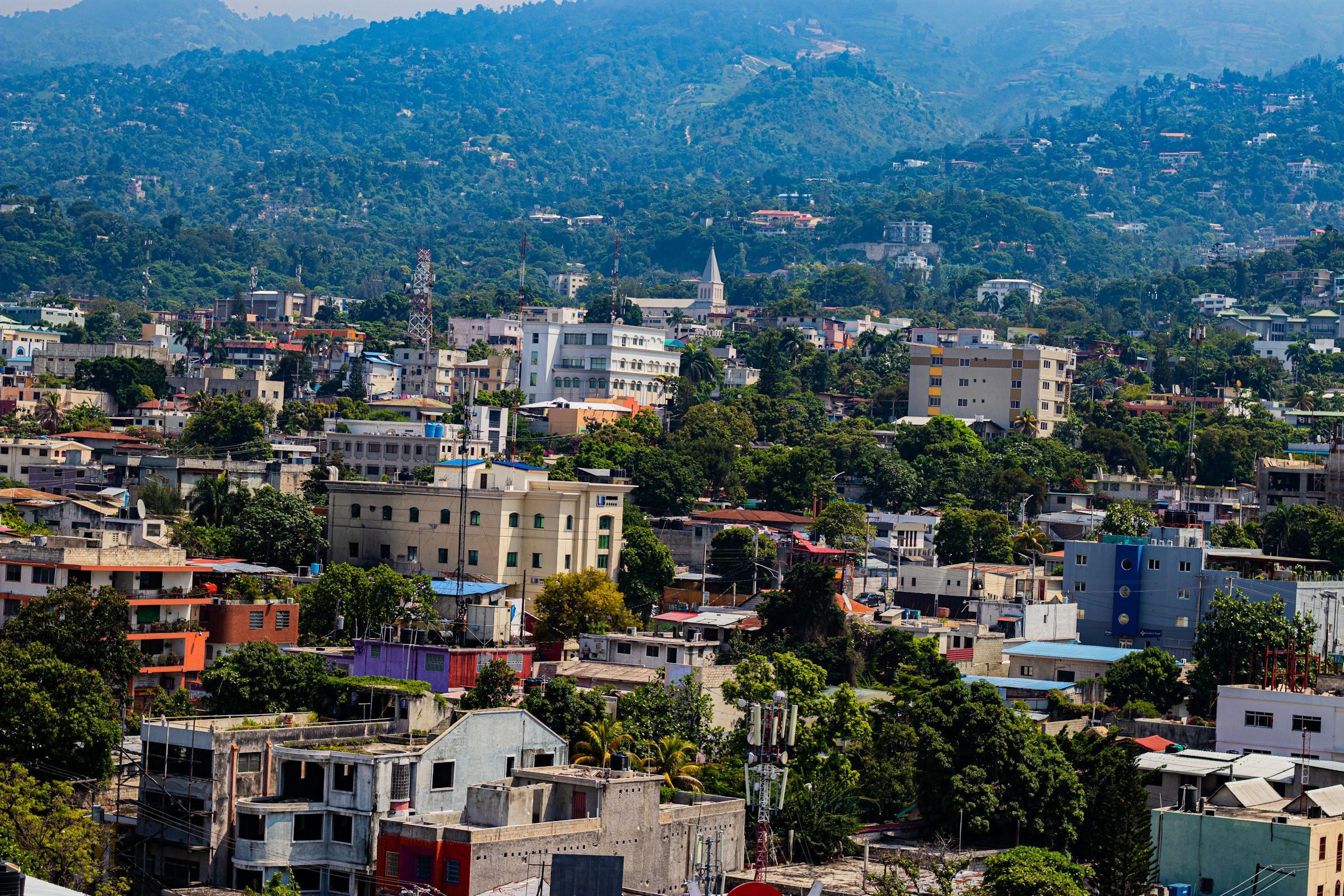
Photo: Petionville, Haiti, available in the public domain via Unsplash.