
Global South Bishops Call for Climate Action at COP30
Catholic bishops from Africa, Asia and Latin America issued a joint statement to world leaders asking for transformative actions at the UN Climate Chance Conference COP30.
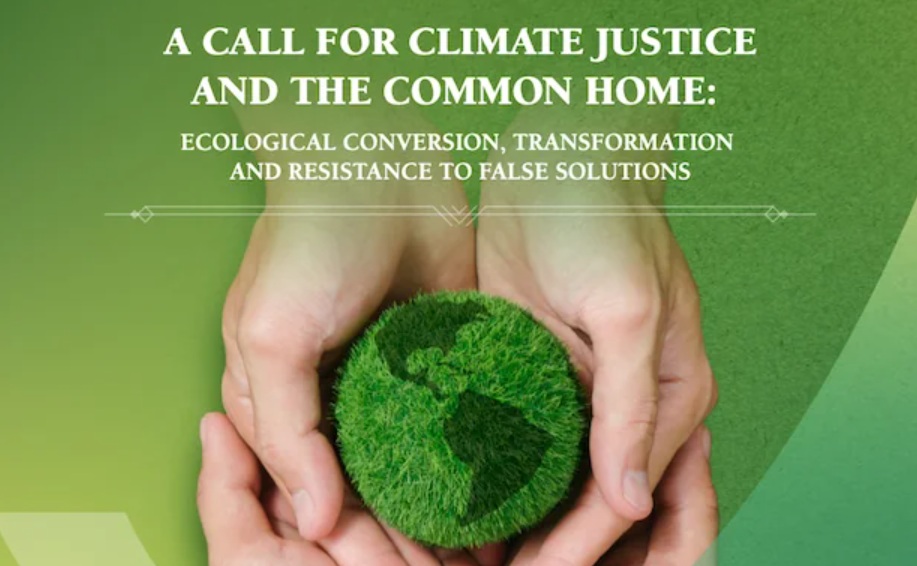
In an appeal to world leaders on June 12, Catholic bishops from Africa, Asia, Latin America and the Caribbean, made the case for action at the UN Climate Change Conference in Brazil in November. “A Call for Climate Justice and the Common Home” was written by bishops from the Symposium of Episcopal Conferences of Africa and Madagascar (SECAM), the Federation of Asian Bishops’ Conferences (FABC), and the Latin American Episcopal Conference (CELAM), and was coordinated by the Pontifical Commission for Latin America, collectively representing 820 million Catholics.
A prophetic call for urgent action
Citing the scientific consensus of the Intergovernmental Panel on Climate Change (IPCC), the bishops warned that global warming is on track to surpass 1.5°C above pre-industrial levels, with devastating effects already felt in the Global South. Desertification alone is displacing or threatening the livelihoods of some 500 million people, while women, girls, and Indigenous peoples are disproportionately impacted.
“The climate crisis,” the bishops wrote, “is also a crisis of values that breeds violence.” They insisted that solutions must go beyond technical fixes to address deeper injustices—an economic paradigm based on extractivism, technocracy, and the commodification of nature. Instead, the bishops lift up an integral ecology that respects both human dignity and the rights of creation.
Rejection of false solutions
A central theme of the appeal is the rejection of so-called “false solutions,” particularly the financialization of nature through carbon offset schemes and profit-driven “green capitalism.” Such approaches, the bishops argue, shift the burden from the polluters to the poor while failing to address the root causes of the crisis.
Instead, the bishops call for the immediate phaseout of fossil fuels, with no new exploration, exploitation, or infrastructure. They denounce mining practices and “energy monocultures” that sacrifice communities and ecosystems. True solutions, they insist, must involve radical economic transformation, just transitions to renewable energy, and respect for planetary boundaries.
Commitments of the Church
The joint statement is not only a call to governments but also a pledge of responsibility from the Church in the Global South. The bishops commit to:
- Defend the sovereignty of Indigenous peoples and local communities over their territories.
- Support agroecology and solidarity economies, as alternatives to extractive models.
- Provide educational programs on integral ecology, human rights, and sustainability.
- Promote spirituality in the arts, culture, and media that fosters ecological awareness and hope.
- Establish an Ecclesial Observatory on Climate Justice, through the Ecclesial Conference of the Amazon, to monitor and denounce unfulfilled COP commitments.
Demands to the international community
The bishops demand that wealthy nations assume their “ecological and social debt.” They call for climate finance that is fair, accessible, and non-exploitative— funds that reach frontline communities directly rather than increasing debt burdens in the Global South.
The bishops also insist on:
- Zero deforestation in all biomes by 2030.
- Ambitious national climate plans (NDCs) that reflect the urgency of the crisis.
- Binding participation of civil society and faith based organizations in climate governance.
- Protection of environmental defenders and vulnerable communities threatened by conflict and displacement.
- Policies to transform production and consumption patterns to be more equitable and sustainable.
A path of hope and conversion
While the document contains strong denunciations, it also radiates hope. The bishops invite all people of goodwill to a “path of ecological conversion,” rooted in solidarity, “happy sobriety,” and the wisdom of Indigenous traditions. They call for intergenerational justice—ensuring that today’s decisions allow future generations to inherit a habitable and flourishing Earth.
The bishops also reaffirm the Church’s prophetic mission to stand with the poor, to defend human rights, and to lift up voices from the margins. For the bishops of Africa, Asia, Latin America, and the Caribbean, the climate crisis is not only a scientific issue—it is a spiritual test of humanity’s capacity for justice, solidarity, and care for our Common Home.