
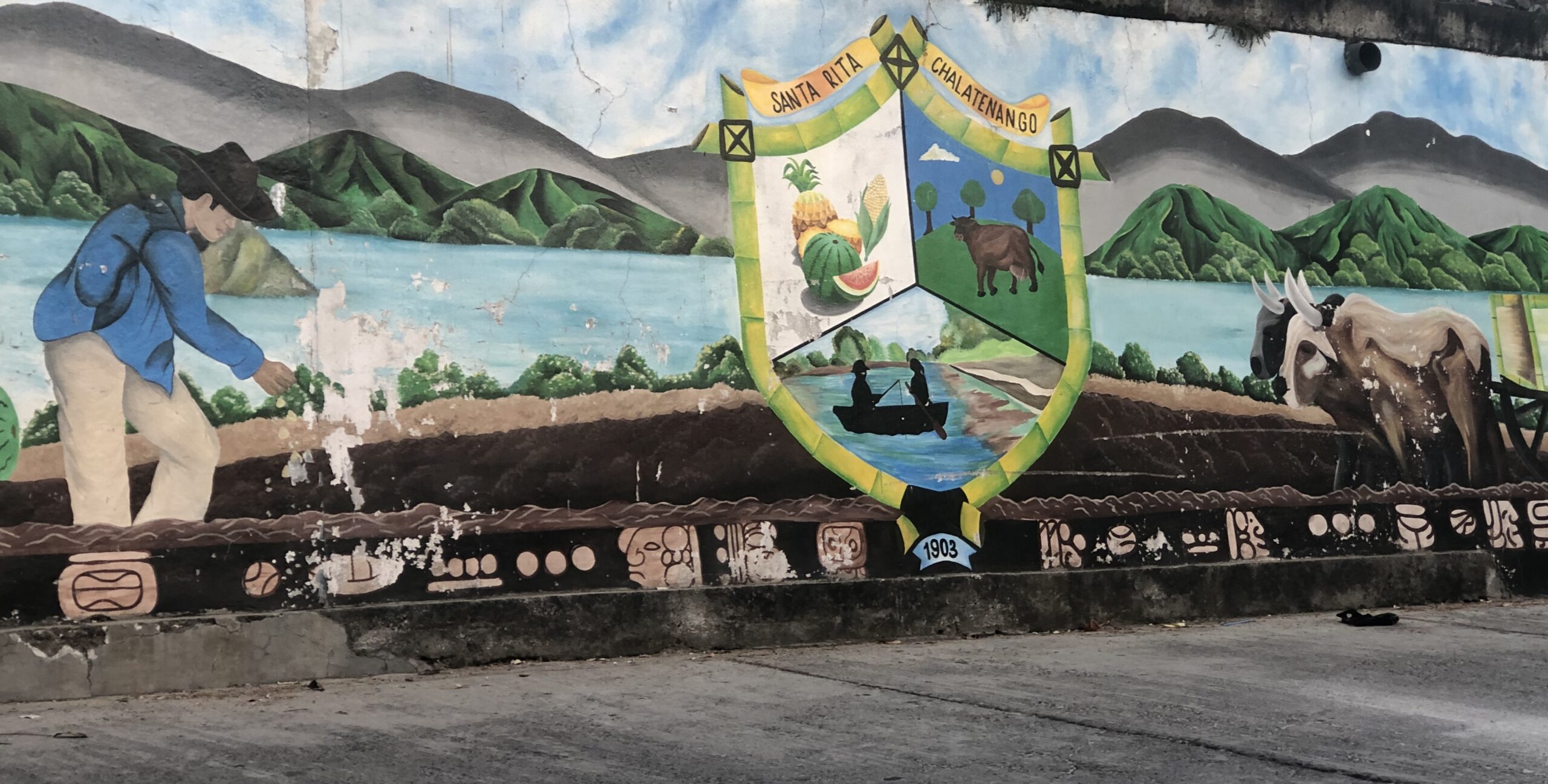
Mural of village life at the entrance of the district of Santa Rita in Chalatenango, El Salvador.
Third Sunday of Advent
Maryknoll lay missioner Sarah Bueter
December 14, 2025
Isaiah 35:1-6a, 10; James 5:7-10; Matthew 11:2-11
Maryknoll lay missioner Sarah Bueter reflects on small acts of love and justice. This reflection is included in our 2025 Advent Reflection Guide, along with discussion questions, prayers and quotes from Maryknoll missioners and affiliates.
In this Sunday’s reading from the Gospel of Matthew, John the Baptist waits in expectation from his prison cell. He receives reports about Jesus and wonders ‘Is this the guy we’ve been waiting for?’
For all the hype, Jesus is making straight forward things happen: “the blind regain their sight, the lame walk, lepers are cleansed, the deaf hear, the dead are raised, and the poor have the good news proclaimed to them” (Mt 11:5).
I imagine the incredulity of John the Baptist: “Is this it?”
As Maryknoll missioners, we commit ourselves to a life of justice and nonviolence among the poor. From the outside, it often looks like: “Is this it?”
In my village in El Salvador, we bury the dead. We share tamales and coffee. We pray in people’s homes. We embroider together and tell stories about the armed conflict. Is this it?
For in my village, we also feel the effects of U.S. migration policy. Salvadorans in the United States call home, frightened and scapegoated by society. A boy who had recently been deported from the United States was shut out of the Salvadoran school system for arriving irregularly mid-year. A 12-year-old girl here won’t talk about what happened to her in Texas last year.
The hydra of forced migration is so monstrous, so multi-headed, that justice for migrants and refugees seems far off, unattainable.
But today’s readings offer hope.
Jesus points out that the kingdom of God is also built upon small things: healing our neighbors, touching the wounds of the migrant, accompanying the poor and vulnerable.
Jesus doesn’t absolve us from addressing structural injustices; rather, he frees us from becoming paralyzed by them: we become free to do something, for we cannot do everything, and do it with great love.
“Take as an example…the prophets,” says our second reading. “Indeed we call blessed those who have persevered.” (James 5:10-11). They were career denouncers of structural injustice, yet prophets neither threw in the towel nor lived without hope.
Nowadays, I watch the Salvadoran girl deported from Texas begin to open up. “Strengthen the hands that are feeble, make firm the knees that are weak,” says Isaiah. She participates more in catechesis class. I visit her home and her mother. We share coffee. I wonder: Is this it?
For me, here, now, in El Salvador, yes — this is how God invites me to address the wounds of forced migration. To do something, not everything, but something: to attend and to heal with great love and attention, to participate in Psalm 146:
The Lord God keeps faith forever,
secures justice for the oppressed,
gives food to the hungry.
The Lord sets captives free.
Photo of a mural of village life at the entrance of the district of Santa Rita in Chalatenango, El Salvador, taken December 22, 2022 by PzzaKing13 and available via Wikimedia commons, CC BY-SA 4.0.
