
Feast of the Holy Family
Susan Gunn, MOGC Director
December 28, 2025
Sirach 3:2-6, 12-14; Colossians 3:12-21; Mt 2:13-15, 19-23
Susan Gunn, Maryknoll Office for Global Concerns Director, explores the Christmas story’s implications in our lives and treatment of migrants and refugees.
The journey of Christmas continues in the readings today. The family of Jesus, Mary, and Joseph must escape an evil ruler and live as refugees in Egypt for a few years.
The Gospel of Matthew tells us the story from Joseph’s perspective. Joseph has a dream where an angel appears to him with a warning: Jesus is in danger from King Herod; and a command: Take Jesus and Mary and seek refuge in Egypt, returning only after receiving word in another dream that it is safe to do so. The obedience and care that Joseph demonstrates is an example to all of us of how to be family to one another.
I also want to reflect on what it means for Jesus, Mary, and Joseph to be refugees in Egypt. Living as refugees in Egypt at the time of Jesus mustn’t have been easy. It’s not easy to be a refugee in Egypt today. According to the UN, many refugees in Egypt come from Sudan and Syria and lack a stable source of income. Coupled with soaring inflation, it’s hard to cover basic needs.
When Jesus, Mary, and Joseph entered Egypt, what did they need? They needed safety, shelter, food, water, medicine – the same things that refugees need today. But that isn’t enough for a family to flourish back then or now.
We are still learning what is ours to do when we encounter migrants and refugees.
Pope Francis famously taught us a four-verb response for meeting migrants and refugees: to welcome, to protect, to promote, and to integrate, emphasizing seeing people as individuals, not problems, and fostering a culture of encounter over fear.
Twenty-five years ago, among my neighbors in Washington, D.C., was a newly arrived refugee family from Vietnam. The father had been persecuted and imprisoned by the Communist government more than a decade earlier and so he and his wife and five children qualified for refugee resettlement in the United States. I had recently visited Vietnam and was eager to tell them how much I enjoyed the food, the beaches, the culture. We became fast friends.
Just as I tried to accompany them on many of their first-time experiences in the United States—first time getting a library card, first time riding the metro train—they opened a whole new world to me: the world of being a refugee, where everything is harder.
Access to jobs, health care, schools—for refugees, they all require a lot of paperwork that often goes wrong. The family of seven soon became a family of eight, living in a one-bedroom apartment. The father worked seven days a week and suffered from ulcers. The mother stayed home to care for the children and suffered from migraines. Most of the children figured out how to make it through their inner-city schools and went on to college.
For one of the teenage children, it all was too difficult—the new language and culture, the poverty and pollution in the city, the exhaustion and homesickness in the family. She ran away to find work in a beach resort town, seeking solace in seeing the ocean and breathing the salt air similar to Vietnam. It was more than three years before she visited the family again.
I was just one person, trying to be their friend. When I think back on our times together, I remember all the ways I couldn’t fix their problems. When they talk about our shared past, they remember the milestones: graduations, moving into a house, weddings, new babies, both in their family and in mine. I appreciate their wisdom for recognizing what matters most. We are like family.
There’s a line in a prayer for World Refugee Day that has always stayed with me: God of our Wandering Ancestors, may refugees find a friend in me, and so make me worthy of the refuge I have found in you.
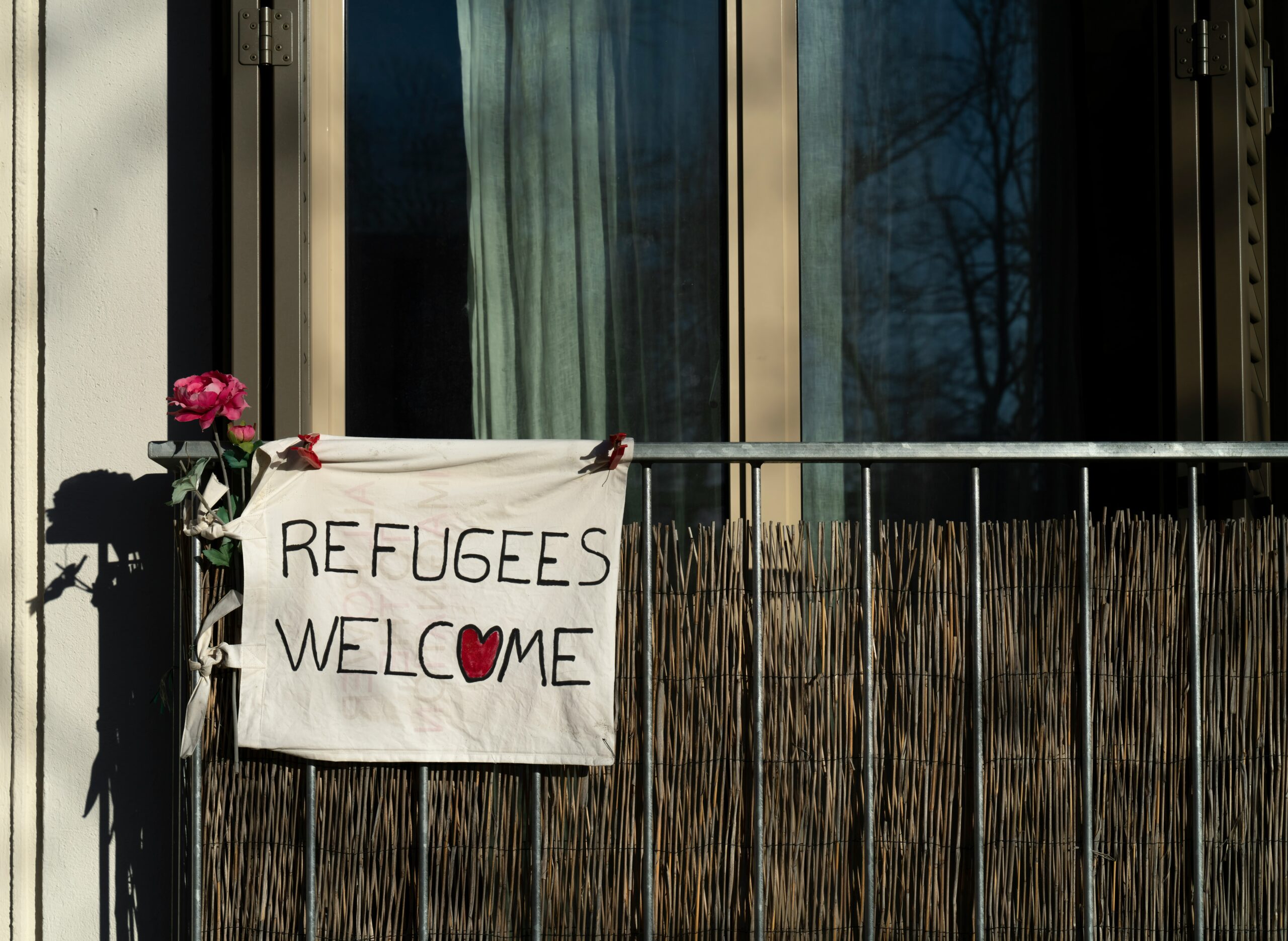
Photo: Sign that says “Refugees Welcome”, available in the public domain via Unsplash.