
Bangladesh Apparel Workers Still at Risk, Investors Say
Concerns about corporate commitments to workplace remediation plans remain as implementation lags.
As Asia’s population approaches four billion, or more than half of the world’s population, the continent presents startling contrasts of wealth and poverty. While its governments range from the autocratic to the democratic, Asia has the potential for exponential economic growth and significant advances in science, health and technology. But the cost of development must take social justice and environmental values into account. In Asia the U.S. encounters ancient cultures and values from which it could learn much, as well as markets and trade opportunities that could benefit both Asia and the U.S. At the same time, robust Asian economies are potential competitors that could challenge the U.S.’s economic dominance in the world. With the U.S., Europe and giants such as China and India competing for critical natural resources, the globalized economy will demand political considerations – and concessions – of the U.S.
The Office for Global Concerns depends on the experience of Maryknoll missioners in Asia, who are deeply involved in many aspects of their hosts’ lives – religious, social, political and economic. Maryknoll personnel act as partners in diverse apostolates – in parish ministry, health work and education. Missioners work with persons with HIV and AIDS and with special needs. They support those living on the margins – people who are displaced, refugees, foreign workers – as they seek to promote peace, social justice and the integrity of creation.
Concerns about corporate commitments to workplace remediation plans remain as implementation lags.
Opening on April 1 in theaters across the U.S. Based on the best selling novel by Patricia McCormick, an unforgettable account of sexual slavery as it exists today in Nepal and India.
This week’s reflection is written by Sr. Mary Ann Smith, who spent many years as a missioner in the Philippines.
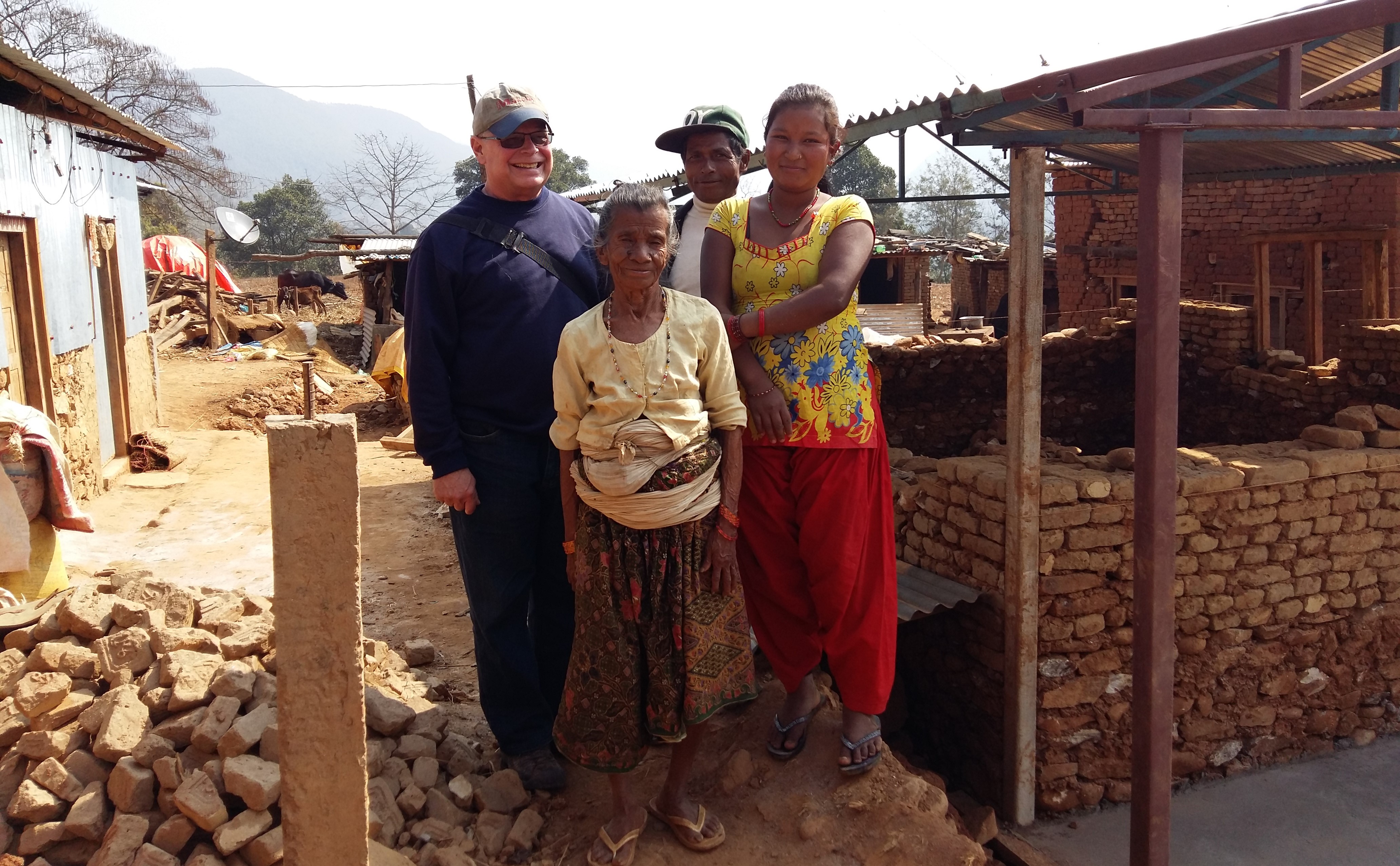
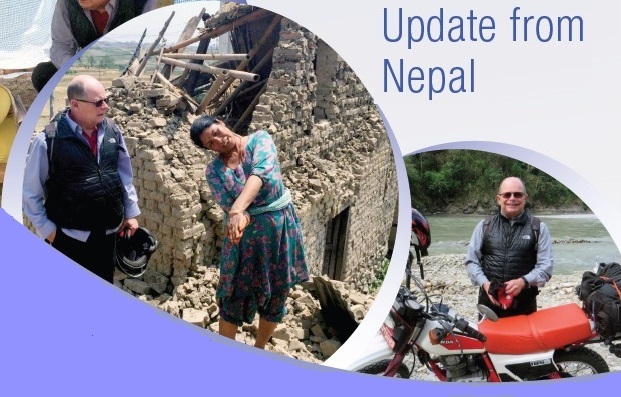
The following article is an update on the work of Maryknoll Father Joe Thaler in Nepal, one year after a massive earthquake struck the country.
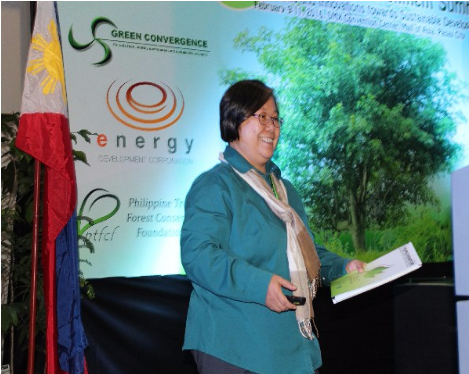
The “First Philippine Environment Summit: Breakthroughs and Innovations toward Sustainable Development” was held in Manila in February to address environmental issues that impact sustainable development.
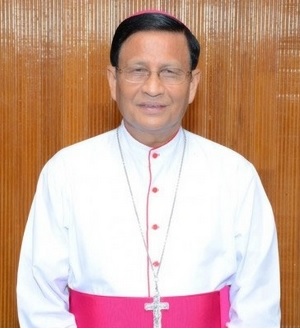
The following interview with Cardinal Charles Maung Bo, the leader of the Catholic Church in Myanmar, was published by the Union of Catholic Asian News (UCAN) on December 2.
On August 8, MASIPAG, a network of farmers’ groups, scientist and non-government organizations in the Philippines, issued a press release about the court decision supporting the retraction of an article in the American Journal of Clinical Nutrition on Golden Rice.
On October 5, the U.S. and 11 other nations finalized negotiations on the biggest trade agreement in history: the Trans-Pacific Partnership (TPP). Many concerns remain about the potential impact of this trade and investment deal on access to medicines and environmental standards.
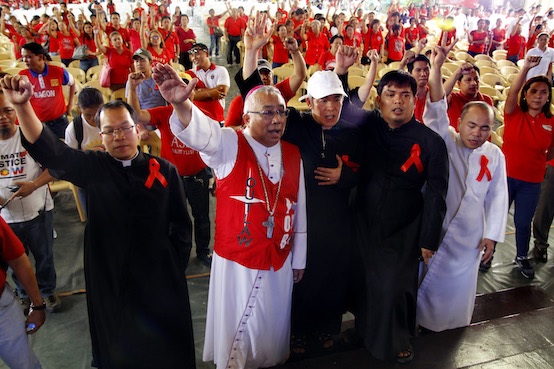
The leader of the Catholic Church in Myanmar, Cardinal Charles Maung Bo, speaks out against recent discriminatory voting rules that could lead to violence as the national Election Day on November 8 nears.
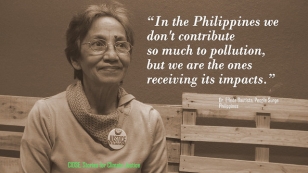
November 8 marks the second anniversary of Typhoon Haiyan, the strongest tropical cyclone ever recorded. It devastated portions of Southeast Asia. In the Philippines, more than 6,000 people died and 4.1 million people were displaced. Many of the approximately 16 million Filipinos living in extreme poverty were affected. This article, published by CIDSE as part of their video series “Stories for Climate Justice” tells the story of Dr. Efleda Bautista, a climate activist in the Philippines. Dr. Bautista describes what climate justice means to her.
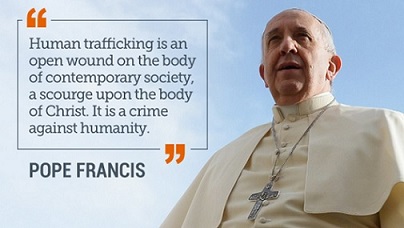
Take action to ensure countries that condone human trafficking are held accountable in trade agreements.
Maryknoll missioners have served in Nepal for many years; currently, Fr. Joe Thaler lives and works in Kathmandu. For five months now, Fr. Joe has been helping the people of Nepal recover from devastating earthquakes and aftershocks.
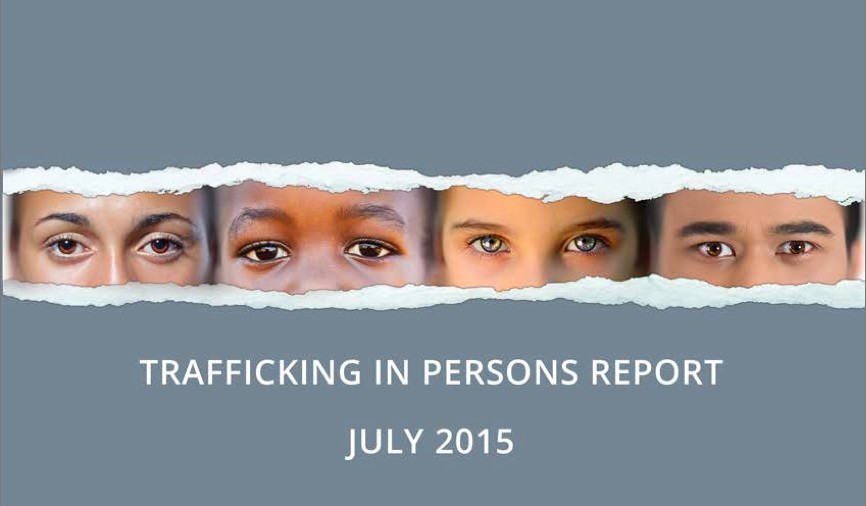
The U.S. Department of State’s 2015 Trafficking in Persons (TIP) report has received more than the usual scrutiny due to ongoing negotiations around the Trans-Pacific Partnership (TPP) involving the U.S. and 11 Pacific Rim nations, and Malaysia’s changing rank on the Trafficking Victims Protection Act (TVPA) compliance list, compiled by the State Department.
On August 11, the U.S. announced that it would not reinstate Bangladesh to a list of developing countries that receive trade preferences for lower or zero-duty tariffs due to labor rights and workplace safety issues.
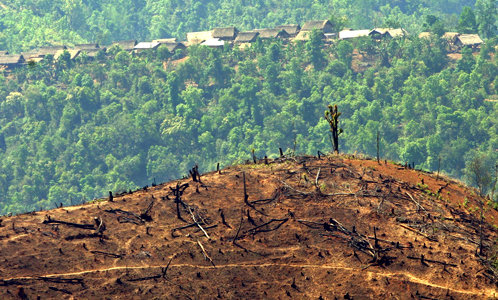
The problem of illegal logging in forests in the developing world represents a microcosm of the phenomenon of exploitation of natural resources by corrupt governing elites that wreak environmental damage while simultaneously diverting government revenue away from public goods.
Fr. James Kroeger, MM, who served in the Philippines, wrote the following reflection which was published in A Maryknoll Liturgical Year: Reflections on the Readings for Year B, available from Orbis Books.
Fr. John Sullivan, MM, who served many years as a missioner in Hong Kong, wrote the following reflection which was published in A Maryknoll Liturgical Year: Reflections on the Readings for Year B, available from Orbis Books.
Sr. Luise Ahrens, MM, who served in Cambodia, wrote the following reflection which was published in A Maryknoll Liturgical Year: Reflections on the Readings for Year B, available from Orbis Books.