

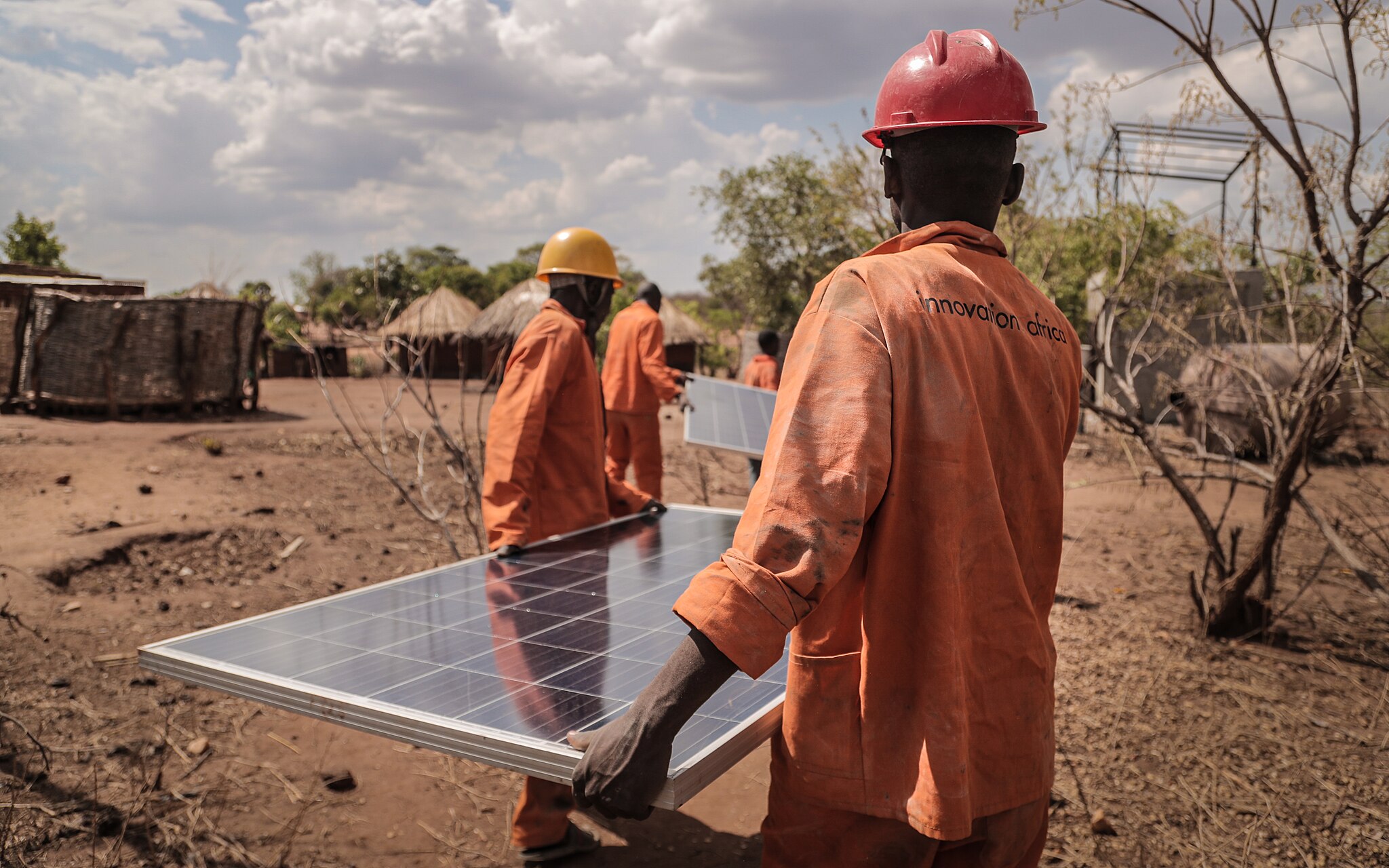
Solar panel installation in Africa.
Africa’s Energy Leap: Leading the Global Transition
Some African countries are bypassing the era of fossil fuels to pioneer decentralized renewable energy, a historic shift that highlights the growing economic dominance of green power and the urgent need for global climate equity.
A profound transformation is unfolding across the African continent, challenging the traditional narrative of industrial development. Africa is currently “leapfrogging” the carbon-heavy path of the past in favor of a future powered by renewables. This shift is not merely a response to environmental necessity but a pragmatic strategy to build modern, decentralized energy systems from the ground up.
Much like the way many African nations bypassed the installation of landline telephone wires to move straight to mobile technology, many are now skipping the era of centralized, coal-fired power plants. Data from the past year reveals a historic turning point in this transition. According to reports from the Global Solar Council, Africa recorded its fastest solar growth to date in 2025, adding 4.5 gigawatts of new capacity—a 54% year-on-year increase.
While industrialized nations struggle with the expensive process of retrofitting aging, fossil-fuel-dependent grids, nations like South Africa, Nigeria, and Egypt are leading the charge in new capacity. This progress is projected to accelerate, with a potential sixfold rise in annual capacity additions by 2029, potentially bringing over 33 gigawatts of new solar capacity to the continent.
By utilizing localized solar power, energy can reach remote clinics, rural schools, and smallholder farms without the need for the massive, environmentally destructive infrastructure typical of Western industrialization. This decentralized model has the added benefit of empowering local communities to manage their own resources and reducing dependence on distant, often unreliable, state-run utilities.
The momentum seen in Africa is part of a broader, unstoppable global trend. Despite the continued profits of fossil fuel companies and the influence of the defense industry, the global economy is signaling a massive pivot. A striking indicator of this shift is found in the changing landscape of global investment: by 2026, for the first time in history, the world is on pace to spend more on green energy infrastructure than on total military expenditures.
This represents a monumental milestone in resource allocation. It suggests that the sheer scale of the renewable energy market has become a dominant economic force. However, while Africa’s initiative is a significant feat of economic resilience, it does not change the scientific reality of climate change. The warming of the planet is driven by the cumulative volume of greenhouse gases released since the Industrial Revolution. Since the United States and other G20 nations are responsible for the vast majority of these historical emissions, they hold a unique “climate debt” to the rest of the world.
The United States’ recent withdrawal from the United Nations Framework Convention on Climate Change (UNFCCC) creates a significant gap in international cooperation. By stepping back from these accords, the U.S. effectively shifts the burden of managing a global crisis onto the Global South—the very region currently leading the way in renewable innovation despite having contributed the least to the problem.
True equity in the energy transition requires that the nations that built their wealth on carbon also lead the way in funding the transition for everyone else. Relying on African nations to innovate their way out of a crisis they did not create is not a sustainable global strategy. The U.S. remains a primary driver of climate change, and its absence from international frameworks does not remove its responsibility to provide the affordable capital and technical support that Africa needs to scale its success.
The fact that global spending on renewables is now outpacing military budgets proves that the tools for a sustainable world are being manufactured at an unprecedented scale. However, the eventual success of the “Green Leap Forward” depends on the world’s largest economies acknowledging their role in the global carbon budget. Authentic stewardship of the planet requires that the historic polluters match Africa’s ingenuity with the financial resources necessary to address the damage already done.
Photo: “Solar energy is driving change across rural Africa”, courtesy of IAfrica76, CC0, via Wikimedia Commons.
