
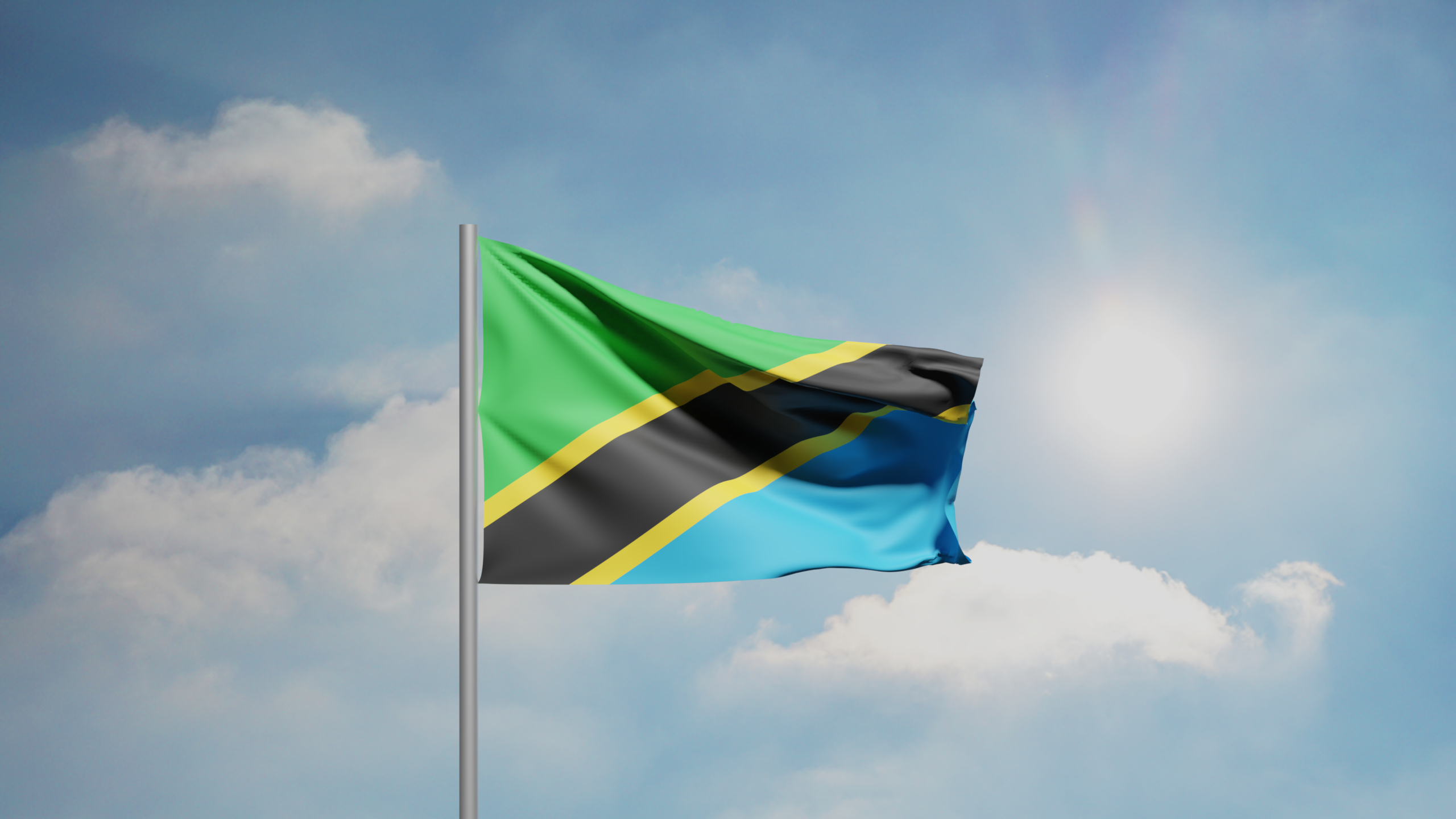
Photo of the Tanzanian flag, available in the Public Domain.
Tanzania: Bishops Call for Justice After Election Violence
The “wave of terror” surrounding general elections in Tanzania has plunged the East African nation into its most severe political and human rights crisis in decades.
In the months leading up to the Oct. 29 election day, the Tanzanian government intensified its repression of opposition parties, most notably CHADEMA. Key political figures, including Tundu Lissu, were arrested on charges of treason, while legal reforms were weaponized to disqualify rival candidates. By election day, the environment was defined by fear, leading to a record-low voter turnout and widespread allegations of fraud as the ruling Chama Cha Mapinduzi (CCM) party claimed a landslide victory with over 97% of the vote.
As results were announced, spontaneous protests erupted in major cities like Dar es Salaam, Arusha, and Mbeya. The government responded with lethal force against unarmed civilians.
Human rights organizations and the UN have documented the harrowing aftermath. Estimates of fatalities range from hundreds to as many as 2,000 people. Reports suggest security forces removed bodies from streets and hospitals, burying victims in mass graves, and incinerating remains to hide the scale of the massacre. The government imposed an internet shutdown from October 29 to November 3, many say to hide their actions.
President Samia Suluhu Hassan justified the violence against protesters, claiming “substantial force” was needed to stop an attempted government overthrow, blaming “unpatriotic” youth and “foreign interference” for the unrest. She also announced that her administration has formed an inquiry commission to investigate the killings, though human rights groups question the investigation’s independence.
In the face of state-sponsored terror, the Catholic bishops conference, known as the Tanzania Episcopal Conference (TEC), has emerged as a leading moral authority. Led by Bishop Wolfgang Pisa, the Catholic bishops issued a statement calling the killings “brutal and murderous” and rejecting the government’s narrative that protesters were criminals, asserting that “the punishment for a protest is not death.”
Archbishop Jude Thaddaeus Ruwa’ichi of Dar es Salaam further highlighted the horror, noting that many victims were “hunted and killed inside their homes” despite not participating in the protests. “Our country has been fractured,” the archbishop said. “We have lost our sense of dignity. What we witnessed during the election week has wounded the soul of Tanzania. This nation has not only lost its respect, but it has lost her people, her very sons and daughters.”
The Catholic Bishops of Tanzania have called for three actions to promote justice: an independent inquiry involving international stakeholders; the immediate release of the hundreds currently facing treason charges; and the return of bodies to families for dignified burial.
CHADEMA, Tanzania’s main opposition party, has called for a transitional government, saying the current government has “no legitimacy.” Tanzanian activists had planned a follow-up protest on December 9, Tanzania’s Independence Day, but police were deployed heavily in major cities ahead of the protests, forcing people to stay home.
Faith in action
Sign a petition to demand an independent investigation.
Photo: Tanzanian flag, available in the public domain via Unsplash.