
We Can End AIDS by 2030
Experts believe ending AIDS as a public health threat by 2030 is possible with enough political will, funding, and access to tools for prevention and treatment.
Today, 40.8 million people are living with HIV globally, 1.3 million new infections occurred in 2024, and 9.2 million people still don’t access treatment. A failure to reach the 2030 global HIV targets in the next Global AIDS Strategy led by UNAIDS could result in an additional 3.3 million new HIV infections between 2025 and 2030.
UNAIDS (Joint United Nations Program on HIV/AIDS) is the leading UN agency coordinating the global effort to end AIDS as a public health threat by 2030, uniting 11 UN organizations to drive a comprehensive response, focusing on prevention, treatment, rights, and data to eliminate new infections, discrimination, and AIDS-related deaths.
The United States had been a key partner and member of the UNAIDS since it began operating in 1996. But that relationship shifted significantly in 2025 under the direction of the Trump administration’s “America First” global health strategy which calls on countries to take more fiscal responsibility for their own health. The United States began demanding bilateral agreements with countries that receive U.S. health funding, with Kenya being one of the first countries to sign such an agreement. The future of U.S. involvement in UNAIDS points toward more of these bilateral agreements where receiving countries take on leadership of their national HIV response by increasing domestic funding and improving health systems, while still receiving some U.S. resources to meet 2030 global AIDS targets.
Ending the AIDS epidemic by 2030 is possible.
According to UNAIDS, the AIDS epidemic can end if we continue to improve access to testing, treatment, prevention, and by addressing stigma. After 40 years of research, long-lasting HIV-prevention injections now exist, removing the need for daily pills. People with HIV can live long, healthy lives with medication, and some have been functionally cured under specific medical circumstances.
Inequalities still exist, putting lives at risk.
The latest report from UNAIDS on the global HIV response details the far-reaching consequences of changes by the United States and other leading countries in 2025. Four decades into what was historic levels of cooperation, inequalities still persist for the most basic services like testing, treatment, and prevention, and even more so for new medications and technologies.
That is why UNAIDS calls on leaders and partners to:
- Reaffirm global solidarity, multilateralism and the collective commitment to fight and end AIDS.
- Maintain funding for the response.
- Invest in innovation, including affordable long-acting prevention and treatment options.
After decades of struggle, the global HIV response is close to ending AIDS as a public health threat by 2030. The world has come too far to let this historic progress unravel.
Prayer by the Maryknoll AIDS Taskforce:
God of all compassion,
Comfort your sons and daughters
Who live with HIV.
Spread over us all your quilt of mercy,
Love and peace.
Open our eyes to your presence
Reflected in their faces.
Open our ears to your truth
Echoing in their hearts.
Give us the strength
To weep with the grieving,
To walk with the lonely,
To stand with the depressed.
May our love mirror your love
For those who live in fear,
Who live under stress and
Who suffer rejection.
Mothering, fathering God
Grant rest to those who have died
And hope to all who live with HIV.
God of life, help us to find the cure now
And help us to build a world in which
No one dies alone and where
Everyone lives accepted
Wanted and loved.
Amen.
Faith in action
Tell Congress to continue to fund life-saving HIV/AIDS programs.
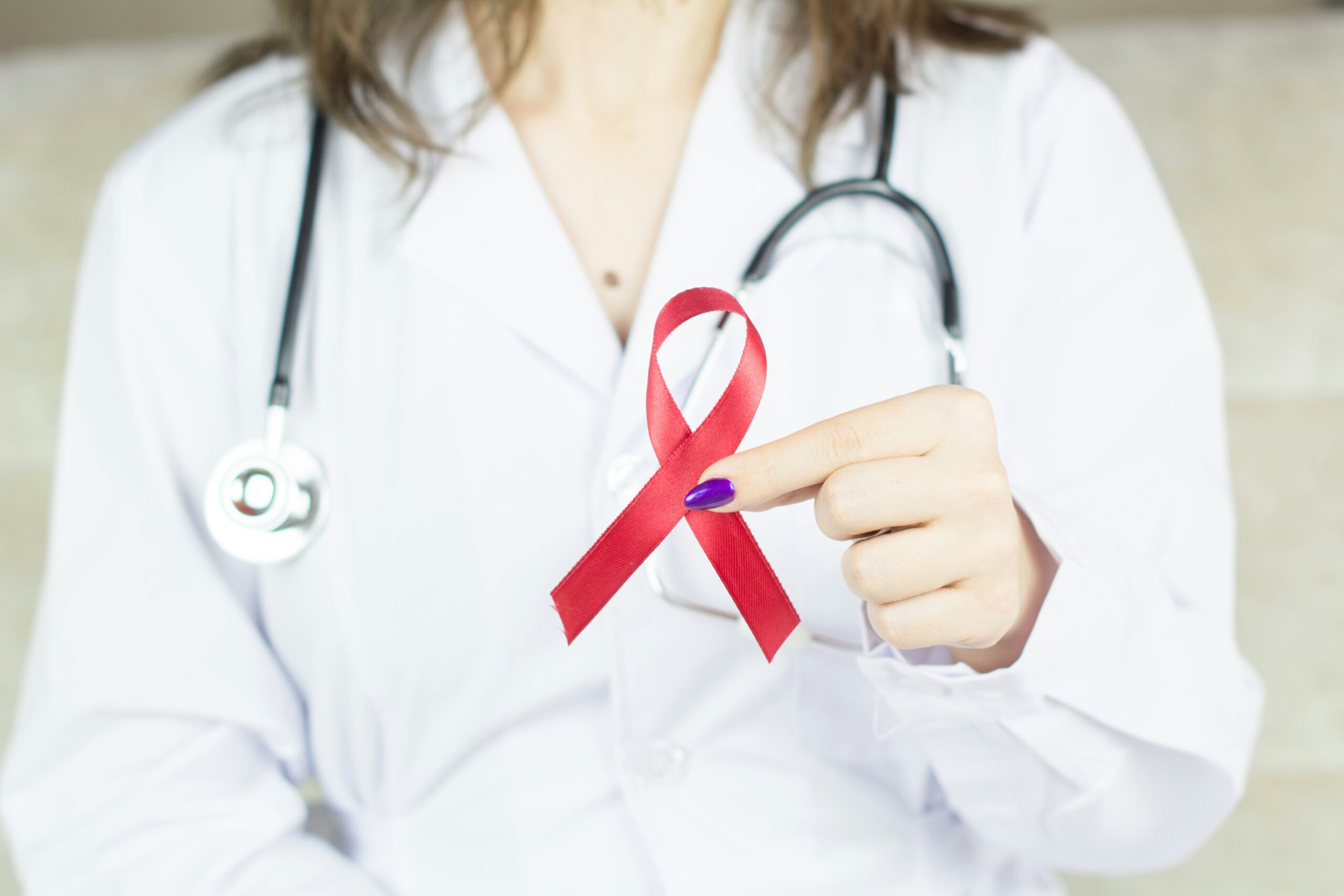
Photo: Doctor holding red AIDS ribbon, available in the public domain via Unsplash.